Uh oh, you are visiting the site using Internet Explorer. Which is an outdated browser.
For the best experience please visit the site using one of the following browsers.
ChromeSafariFirefox
Profile: Use this simple, team friendly guide to audit your cupboards and storerooms, reduce waste, uncover forgotten resources, align learning with children’s needs, and restock with intentional, EYLF aligned purchasing.
Written by: Ruby Polanco
A simple, team friendly guide to audit your resoucres
As a new year, term, or even just a new week begins, we often feel the urge to start fresh. In childcare, one of the biggest challenges we encounter with a fresh start is often our cupboards. Whether it's a brand-new centre or one that's been around for a while, I've noticed that both face the same issue: no one knows what's in their cupboards, leading to resources getting lost and forgotten, and re-purchasing what’s already there.
We tend to look only at the first layer in our cupboards because we’re familiar with what's there. But beyond that? Who knows what’s lurking in the back? Cleaning it out and discovering what's inside can feel daunting. This task doesn’t often come to mind during our busy days, but it still weighs on us in the background.
When restocking, setting up experiences, choosing new resources, or even sharing resources between rooms, educators need a clear understanding of what’s already available. This knowledge enables meaningful and intentional choices.
So, isn't it time to dig a little deeper into those cupboards and take inventory?
Taking Stock and Taking Charge
Going through your cupboards and storerooms can be a powerful practice. Whilst it sounds like a chore, making a regular stocktake a part of your year means it becomes a part of your intentional and reflective practice.
Knowledge is power, as they say, and by building a strong foundational understanding of what resources you have and where to find them, educators become empowered to make more informed choices. This understanding allows educators to be intentional in their curriculum choices and enhance their ability to align learning experiences with children's current interests. It also allows leadership teams to experience the same intentionality when purchasing resources and restocking the centre.
Another important aspect of embracing this stocktake method is the reflective element. When you take everything out and really look at it as a team, you more deeply reflect on things like:
How are we caring for our resources? Is there room for improvement?
Are we over- or under-purchasing in some learning areas?
Are there resources we are not reaching for? Why might this be?
Are there learning gaps in our resources?
Where do you start?
You can approach a stocktake as often or as few times as you like. As a team, it’s essential to reflect on and consider how this activity will fit into your centre’s timeline. The most important part, however, is that it is a team activity, taking place during a time when everyone can participate as a whole or within their respective room teams. Whether you organise a weekend working-bee or dedicate a team meeting to completing the task, it should be done together to build a community understanding and sense of ownership for educators. So where to from there?
Time to Empty Those Cupboards
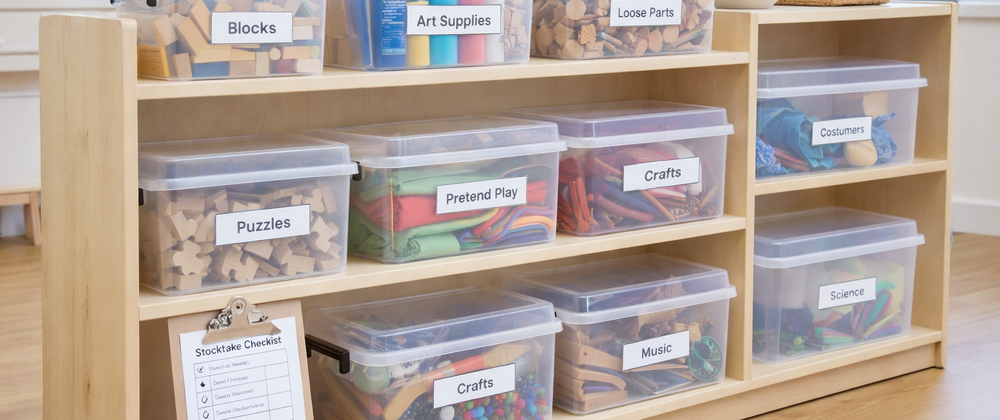
The time has come to dig a little deeper and pull everything out of the cupboards. As you do in each room, place everything out on the floor or tables or tubs (whatever works for you and your space) and group like items together (blocks, puzzles, pretend play, costumes, etc.).
Sorting Through the Groups
Looking at each of your groups, break them into categories such as:
Broken/damaged/missing parts
Development/age mismatch (meaning probably better suited to an older or younger room)
Frequently used
Rarely used
Careful Reflection
This step is at the heart of the process. Once you've organised items into clear categories, it’s time for the team to start asking thoughtful, reflective questions.
If you come across many broken or damaged items, consider why this might be happening. What’s causing the lack of care? How can your team improve this in the future?
For items that don’t match the skill level of the room they’re in, think about which room would be a better fit. How can your team determine and understand the age appropriateness of your resources?
For frequently used items, discuss why these are so popular with children. Do you have enough of these resources for the number of children?
For resources that are rarely used, consider why this might be. Is there a gap in knowledge about how to use these resources? How can you address this and close that gap? In situations like this, it’s helpful to reach out for support. Our amazing team at Bellbird is always ready to answer questions about using resources, provide much-needed support, or even offer inspiration!
Finally, think about whether there are gaps in your resources. Are there learning areas, abilities, or needs not being met with your current selection?
Once you’ve reflected, it’s time to put things back where they belong! Really consider what’s going to work well for your team, make resources accessible, and don't get lost and forgotten. A great place to start is to keep like items or themes together so they are easy to go through and access.
*Tip! This is a great activity to include in your QIP as evidence of ongoing reflection, intentional decision-making, and continuous improvement.
Restocking with Intention
Now it’s time to connect your stocktake and reflection to better purchasing decisions. Once you’ve reflected on what you have and how your children and educator use those items, you can make more informed and intentional decisions about what to purchase next. Here’s how to align your buying choices with your centre’s needs:
Create a Wish List: Based on your reflections, compile a list of resources that would enhance learning experiences or fill gaps you've identified. Prioritise items that support the developmental stages and interests of the children in your care.
Set a Budget: Determine how much you can allocate to new resources. This will help you focus on purchasing high-impact items that fit within your financial constraints.
Collaborate with Trusted Suppliers: Reach out to reliable suppliers such as Bellbird to help you find resources that specifically meet your needs and fit within your budget. Their expertise can guide you in selecting quality products.
Involve Your Team: Encourage educators to contribute their ideas and feedback on potential purchases. This collaborative approach ensures that the resources selected will be well-utilised and appreciated by those who use them most.
Think Long-Term: Choose versatile resources that can be used across various age groups and learning areas. This approach maximises your investment and ensures longevity in your resource collection.
Monitor Usage: After new items are introduced, keep track of how often they are used and their impact on learning. This ongoing assessment will inform future purchasing decisions and help you maintain a dynamic and effective resource inventory.
By taking these steps, you not only enhance your centre’s resource collection but also demonstrate a commitment to intentionality and continuous improvement. This thoughtful approach to restocking ensures that your educational environment remains engaging, responsive, and aligned with the evolving needs of your children and educators.
Related Articles
Creating Sustainable Superheroes
Building eco-awareness and responsibility in the early years
A simple, team friendly guide to audit your resoucres
As a new year, term, or even just a new week begins, we often feel the urge to start fresh. In childcare, one of the biggest challenges we encounter with a fresh start is often our cupboards. Whether it's a brand-new centre or one that's been around for a while, I've noticed that both face the same issue: no one knows what's in their cupboards, leading to resources getting lost and forgotten, and re-purchasing what’s already there.
We tend to look only at the first layer in our cupboards because we’re familiar with what's there. But beyond that? Who knows what’s lurking in the back? Cleaning it out and discovering what's inside can feel daunting. This task doesn’t often come to mind during our busy days, but it still weighs on us in the background.
When restocking, setting up experiences, choosing new resources, or even sharing resources between rooms, educators need a clear understanding of what’s already available. This knowledge enables meaningful and intentional choices.
So, isn't it time to dig a little deeper into those cupboards and take inventory?
Taking Stock and Taking Charge
Going through your cupboards and storerooms can be a powerful practice. Whilst it sounds like a chore, making a regular stocktake a part of your year means it becomes a part of your intentional and reflective practice.
Knowledge is power, as they say, and by building a strong foundational understanding of what resources you have and where to find them, educators become empowered to make more informed choices. This understanding allows educators to be intentional in their curriculum choices and enhance their ability to align learning experiences with children's current interests. It also allows leadership teams to experience the same intentionality when purchasing resources and restocking the centre.
Another important aspect of embracing this stocktake method is the reflective element. When you take everything out and really look at it as a team, you more deeply reflect on things like:
How are we caring for our resources? Is there room for improvement?
Are we over- or under-purchasing in some learning areas?
Are there resources we are not reaching for? Why might this be?
Are there learning gaps in our resources?
Where do you start?
You can approach a stocktake as often or as few times as you like. As a team, it’s essential to reflect on and consider how this activity will fit into your centre’s timeline. The most important part, however, is that it is a team activity, taking place during a time when everyone can participate as a whole or within their respective room teams. Whether you organise a weekend working-bee or dedicate a team meeting to completing the task, it should be done together to build a community understanding and sense of ownership for educators. So where to from there?
Time to Empty Those Cupboards
The time has come to dig a little deeper and pull everything out of the cupboards. As you do in each room, place everything out on the floor or tables or tubs (whatever works for you and your space) and group like items together (blocks, puzzles, pretend play, costumes, etc.).
Sorting Through the Groups
Looking at each of your groups, break them into categories such as:
Broken/damaged/missing parts
Development/age mismatch (meaning probably better suited to an older or younger room)
Frequently used
Rarely used
Careful Reflection
This step is at the heart of the process. Once you've organised items into clear categories, it’s time for the team to start asking thoughtful, reflective questions.
If you come across many broken or damaged items, consider why this might be happening. What’s causing the lack of care? How can your team improve this in the future?
For items that don’t match the skill level of the room they’re in, think about which room would be a better fit. How can your team determine and understand the age appropriateness of your resources?
For frequently used items, discuss why these are so popular with children. Do you have enough of these resources for the number of children?
For resources that are rarely used, consider why this might be. Is there a gap in knowledge about how to use these resources? How can you address this and close that gap? In situations like this, it’s helpful to reach out for support. Our amazing team at Bellbird is always ready to answer questions about using resources, provide much-needed support, or even offer inspiration!
Finally, think about whether there are gaps in your resources. Are there learning areas, abilities, or needs not being met with your current selection?
Once you’ve reflected, it’s time to put things back where they belong! Really consider what’s going to work well for your team, make resources accessible, and don't get lost and forgotten. A great place to start is to keep like items or themes together so they are easy to go through and access.
*Tip! This is a great activity to include in your QIP as evidence of ongoing reflection, intentional decision-making, and continuous improvement.
Restocking with Intention
Now it’s time to connect your stocktake and reflection to better purchasing decisions. Once you’ve reflected on what you have and how your children and educator use those items, you can make more informed and intentional decisions about what to purchase next. Here’s how to align your buying choices with your centre’s needs:
Create a Wish List: Based on your reflections, compile a list of resources that would enhance learning experiences or fill gaps you've identified. Prioritise items that support the developmental stages and interests of the children in your care.
Set a Budget: Determine how much you can allocate to new resources. This will help you focus on purchasing high-impact items that fit within your financial constraints.
Collaborate with Trusted Suppliers: Reach out to reliable suppliers such as Bellbird to help you find resources that specifically meet your needs and fit within your budget. Their expertise can guide you in selecting quality products.
Involve Your Team: Encourage educators to contribute their ideas and feedback on potential purchases. This collaborative approach ensures that the resources selected will be well-utilised and appreciated by those who use them most.
Think Long-Term: Choose versatile resources that can be used across various age groups and learning areas. This approach maximises your investment and ensures longevity in your resource collection.
Monitor Usage: After new items are introduced, keep track of how often they are used and their impact on learning. This ongoing assessment will inform future purchasing decisions and help you maintain a dynamic and effective resource inventory.
By taking these steps, you not only enhance your centre’s resource collection but also demonstrate a commitment to intentionality and continuous improvement. This thoughtful approach to restocking ensures that your educational environment remains engaging, responsive, and aligned with the evolving needs of your children and educators.
3809 Use this simple, team friendly guide to audit your cupboards and storerooms, reduce waste, uncover forgotten resources, align learning with children’s needs, and restock with intentional, EYLF aligned purchasing. Restocking with Intention: The Cupboard Stocktake 3809 Restocking with Intention: The Cupboard Stocktake Use this simple, team friendly guide to audit your cupboards and storerooms, reduce waste, uncover forgotten resources, align learning with children’s needs, and restock with intentional, EYLF aligned purchasing. 3809 3 3
A simple, team friendly guide to audit your resoucres
As a new year, term, or even just a new week begins, we often feel the urge to start fresh. In childcare, one of the biggest challenges we encounter with a fresh start is often our cupboards. Whether it's a brand-new centre or one that's been around for a while, I've noticed that both face the same issue: no one knows what's in their cupboards, leading to resources getting lost and forgotten, and re-purchasing what’s already there.
We tend to look only at the first layer in our cupboards because we’re familiar with what's there. But beyond that? Who knows what’s lurking in the back? Cleaning it out and discovering what's inside can feel daunting. This task doesn’t often come to mind during our busy days, but it still weighs on us in the background.
When restocking, setting up experiences, choosing new resources, or even sharing resources between rooms, educators need a clear understanding of what’s already available. This knowledge enables meaningful and intentional choices.
So, isn't it time to dig a little deeper into those cupboards and take inventory?
Taking Stock and Taking Charge
Going through your cupboards and storerooms can be a powerful practice. Whilst it sounds like a chore, making a regular stocktake a part of your year means it becomes a part of your intentional and reflective practice.
Knowledge is power, as they say, and by building a strong foundational understanding of what resources you have and where to find them, educators become empowered to make more informed choices. This understanding allows educators to be intentional in their curriculum choices and enhance their ability to align learning experiences with children's current interests. It also allows leadership teams to experience the same intentionality when purchasing resources and restocking the centre.
Another important aspect of embracing this stocktake method is the reflective element. When you take everything out and really look at it as a team, you more deeply reflect on things like:
How are we caring for our resources? Is there room for improvement?
Are we over- or under-purchasing in some learning areas?
Are there resources we are not reaching for? Why might this be?
Are there learning gaps in our resources?
Where do you start?
You can approach a stocktake as often or as few times as you like. As a team, it’s essential to reflect on and consider how this activity will fit into your centre’s timeline. The most important part, however, is that it is a team activity, taking place during a time when everyone can participate as a whole or within their respective room teams. Whether you organise a weekend working-bee or dedicate a team meeting to completing the task, it should be done together to build a community understanding and sense of ownership for educators. So where to from there?
Time to Empty Those Cupboards
The time has come to dig a little deeper and pull everything out of the cupboards. As you do in each room, place everything out on the floor or tables or tubs (whatever works for you and your space) and group like items together (blocks, puzzles, pretend play, costumes, etc.).
Sorting Through the Groups
Looking at each of your groups, break them into categories such as:
Broken/damaged/missing parts
Development/age mismatch (meaning probably better suited to an older or younger room)
Frequently used
Rarely used
Careful Reflection
This step is at the heart of the process. Once you've organised items into clear categories, it’s time for the team to start asking thoughtful, reflective questions.
If you come across many broken or damaged items, consider why this might be happening. What’s causing the lack of care? How can your team improve this in the future?
For items that don’t match the skill level of the room they’re in, think about which room would be a better fit. How can your team determine and understand the age appropriateness of your resources?
For frequently used items, discuss why these are so popular with children. Do you have enough of these resources for the number of children?
For resources that are rarely used, consider why this might be. Is there a gap in knowledge about how to use these resources? How can you address this and close that gap? In situations like this, it’s helpful to reach out for support. Our amazing team at Bellbird is always ready to answer questions about using resources, provide much-needed support, or even offer inspiration!
Finally, think about whether there are gaps in your resources. Are there learning areas, abilities, or needs not being met with your current selection?
Once you’ve reflected, it’s time to put things back where they belong! Really consider what’s going to work well for your team, make resources accessible, and don't get lost and forgotten. A great place to start is to keep like items or themes together so they are easy to go through and access.
*Tip! This is a great activity to include in your QIP as evidence of ongoing reflection, intentional decision-making, and continuous improvement.
Restocking with Intention
Now it’s time to connect your stocktake and reflection to better purchasing decisions. Once you’ve reflected on what you have and how your children and educator use those items, you can make more informed and intentional decisions about what to purchase next. Here’s how to align your buying choices with your centre’s needs:
Create a Wish List: Based on your reflections, compile a list of resources that would enhance learning experiences or fill gaps you've identified. Prioritise items that support the developmental stages and interests of the children in your care.
Set a Budget: Determine how much you can allocate to new resources. This will help you focus on purchasing high-impact items that fit within your financial constraints.
Collaborate with Trusted Suppliers: Reach out to reliable suppliers such as Bellbird to help you find resources that specifically meet your needs and fit within your budget. Their expertise can guide you in selecting quality products.
Involve Your Team: Encourage educators to contribute their ideas and feedback on potential purchases. This collaborative approach ensures that the resources selected will be well-utilised and appreciated by those who use them most.
Think Long-Term: Choose versatile resources that can be used across various age groups and learning areas. This approach maximises your investment and ensures longevity in your resource collection.
Monitor Usage: After new items are introduced, keep track of how often they are used and their impact on learning. This ongoing assessment will inform future purchasing decisions and help you maintain a dynamic and effective resource inventory.
By taking these steps, you not only enhance your centre’s resource collection but also demonstrate a commitment to intentionality and continuous improvement. This thoughtful approach to restocking ensures that your educational environment remains engaging, responsive, and aligned with the evolving needs of your children and educators.
Curious about Play Restocking with Intention: The Cupboard Stocktake Restocking with Intention: The Cupboard Stocktake
A simple, team friendly guide to audit your resoucres
As a new year, term, or even just a new week begins, we often feel the urge to start fresh. In childcare, one of the biggest challenges we encounter with a fresh start is often our cupboards. Whether it's a brand-new centre or one that's been around for a while, I've noticed that both face the same issue: no one knows what's in their cupboards, leading to resources getting lost and forgotten, and re-purchasing what’s already there.
We tend to look only at the first layer in our cupboards because we’re familiar with what's there. But beyond that? Who knows what’s lurking in the back? Cleaning it out and discovering what's inside can feel daunting. This task doesn’t often come to mind during our busy days, but it still weighs on us in the background.
When restocking, setting up experiences, choosing new resources, or even sharing resources between rooms, educators need a clear understanding of what’s already available. This knowledge enables meaningful and intentional choices.
So, isn't it time to dig a little deeper into those cupboards and take inventory?
Taking Stock and Taking Charge
Going through your cupboards and storerooms can be a powerful practice. Whilst it sounds like a chore, making a regular stocktake a part of your year means it becomes a part of your intentional and reflective practice.
Knowledge is power, as they say, and by building a strong foundational understanding of what resources you have and where to find them, educators become empowered to make more informed choices. This understanding allows educators to be intentional in their curriculum choices and enhance their ability to align learning experiences with children's current interests. It also allows leadership teams to experience the same intentionality when purchasing resources and restocking the centre.
Another important aspect of embracing this stocktake method is the reflective element. When you take everything out and really look at it as a team, you more deeply reflect on things like:
How are we caring for our resources? Is there room for improvement?
Are we over- or under-purchasing in some learning areas?
Are there resources we are not reaching for? Why might this be?
Are there learning gaps in our resources?
Where do you start?
You can approach a stocktake as often or as few times as you like. As a team, it’s essential to reflect on and consider how this activity will fit into your centre’s timeline. The most important part, however, is that it is a team activity, taking place during a time when everyone can participate as a whole or within their respective room teams. Whether you organise a weekend working-bee or dedicate a team meeting to completing the task, it should be done together to build a community understanding and sense of ownership for educators. So where to from there?
Time to Empty Those Cupboards
The time has come to dig a little deeper and pull everything out of the cupboards. As you do in each room, place everything out on the floor or tables or tubs (whatever works for you and your space) and group like items together (blocks, puzzles, pretend play, costumes, etc.).
Sorting Through the Groups
Looking at each of your groups, break them into categories such as:
Broken/damaged/missing parts
Development/age mismatch (meaning probably better suited to an older or younger room)
Frequently used
Rarely used
Careful Reflection
This step is at the heart of the process. Once you've organised items into clear categories, it’s time for the team to start asking thoughtful, reflective questions.
If you come across many broken or damaged items, consider why this might be happening. What’s causing the lack of care? How can your team improve this in the future?
For items that don’t match the skill level of the room they’re in, think about which room would be a better fit. How can your team determine and understand the age appropriateness of your resources?
For frequently used items, discuss why these are so popular with children. Do you have enough of these resources for the number of children?
For resources that are rarely used, consider why this might be. Is there a gap in knowledge about how to use these resources? How can you address this and close that gap? In situations like this, it’s helpful to reach out for support. Our amazing team at Bellbird is always ready to answer questions about using resources, provide much-needed support, or even offer inspiration!
Finally, think about whether there are gaps in your resources. Are there learning areas, abilities, or needs not being met with your current selection?
Once you’ve reflected, it’s time to put things back where they belong! Really consider what’s going to work well for your team, make resources accessible, and don't get lost and forgotten. A great place to start is to keep like items or themes together so they are easy to go through and access.
*Tip! This is a great activity to include in your QIP as evidence of ongoing reflection, intentional decision-making, and continuous improvement.
Restocking with Intention
Now it’s time to connect your stocktake and reflection to better purchasing decisions. Once you’ve reflected on what you have and how your children and educator use those items, you can make more informed and intentional decisions about what to purchase next. Here’s how to align your buying choices with your centre’s needs:
Create a Wish List: Based on your reflections, compile a list of resources that would enhance learning experiences or fill gaps you've identified. Prioritise items that support the developmental stages and interests of the children in your care.
Set a Budget: Determine how much you can allocate to new resources. This will help you focus on purchasing high-impact items that fit within your financial constraints.
Collaborate with Trusted Suppliers: Reach out to reliable suppliers such as Bellbird to help you find resources that specifically meet your needs and fit within your budget. Their expertise can guide you in selecting quality products.
Involve Your Team: Encourage educators to contribute their ideas and feedback on potential purchases. This collaborative approach ensures that the resources selected will be well-utilised and appreciated by those who use them most.
Think Long-Term: Choose versatile resources that can be used across various age groups and learning areas. This approach maximises your investment and ensures longevity in your resource collection.
Monitor Usage: After new items are introduced, keep track of how often they are used and their impact on learning. This ongoing assessment will inform future purchasing decisions and help you maintain a dynamic and effective resource inventory.
By taking these steps, you not only enhance your centre’s resource collection but also demonstrate a commitment to intentionality and continuous improvement. This thoughtful approach to restocking ensures that your educational environment remains engaging, responsive, and aligned with the evolving needs of your children and educators.
y Ruby Polanco n
A simple, team friendly guide to audit your resoucres
As a new year, term, or even just a new week begins, we often feel the urge to start fresh. In childcare, one of the biggest challenges we encounter with a fresh start is often our cupboards. Whether it's a brand-new centre or one that's been around for a while, I've noticed that both face the same issue: no one knows what's in their cupboards, leading to resources getting lost and forgotten, and re-purchasing what’s already there.
We tend to look only at the first layer in our cupboards because we’re familiar with what's there. But beyond that? Who knows what’s lurking in the back? Cleaning it out and discovering what's inside can feel daunting. This task doesn’t often come to mind during our busy days, but it still weighs on us in the background.
When restocking, setting up experiences, choosing new resources, or even sharing resources between rooms, educators need a clear understanding of what’s already available. This knowledge enables meaningful and intentional choices.
So, isn't it time to dig a little deeper into those cupboards and take inventory?
Taking Stock and Taking Charge
Going through your cupboards and storerooms can be a powerful practice. Whilst it sounds like a chore, making a regular stocktake a part of your year means it becomes a part of your intentional and reflective practice.
Knowledge is power, as they say, and by building a strong foundational understanding of what resources you have and where to find them, educators become empowered to make more informed choices. This understanding allows educators to be intentional in their curriculum choices and enhance their ability to align learning experiences with children's current interests. It also allows leadership teams to experience the same intentionality when purchasing resources and restocking the centre.
Another important aspect of embracing this stocktake method is the reflective element. When you take everything out and really look at it as a team, you more deeply reflect on things like:
How are we caring for our resources? Is there room for improvement?
Are we over- or under-purchasing in some learning areas?
Are there resources we are not reaching for? Why might this be?
Are there learning gaps in our resources?
Where do you start?
You can approach a stocktake as often or as few times as you like. As a team, it’s essential to reflect on and consider how this activity will fit into your centre’s timeline. The most important part, however, is that it is a team activity, taking place during a time when everyone can participate as a whole or within their respective room teams. Whether you organise a weekend working-bee or dedicate a team meeting to completing the task, it should be done together to build a community understanding and sense of ownership for educators. So where to from there?
Time to Empty Those Cupboards
The time has come to dig a little deeper and pull everything out of the cupboards. As you do in each room, place everything out on the floor or tables or tubs (whatever works for you and your space) and group like items together (blocks, puzzles, pretend play, costumes, etc.).
Sorting Through the Groups
Looking at each of your groups, break them into categories such as:
Broken/damaged/missing parts
Development/age mismatch (meaning probably better suited to an older or younger room)
Frequently used
Rarely used
Careful Reflection
This step is at the heart of the process. Once you've organised items into clear categories, it’s time for the team to start asking thoughtful, reflective questions.
If you come across many broken or damaged items, consider why this might be happening. What’s causing the lack of care? How can your team improve this in the future?
For items that don’t match the skill level of the room they’re in, think about which room would be a better fit. How can your team determine and understand the age appropriateness of your resources?
For frequently used items, discuss why these are so popular with children. Do you have enough of these resources for the number of children?
For resources that are rarely used, consider why this might be. Is there a gap in knowledge about how to use these resources? How can you address this and close that gap? In situations like this, it’s helpful to reach out for support. Our amazing team at Bellbird is always ready to answer questions about using resources, provide much-needed support, or even offer inspiration!
Finally, think about whether there are gaps in your resources. Are there learning areas, abilities, or needs not being met with your current selection?
Once you’ve reflected, it’s time to put things back where they belong! Really consider what’s going to work well for your team, make resources accessible, and don't get lost and forgotten. A great place to start is to keep like items or themes together so they are easy to go through and access.
*Tip! This is a great activity to include in your QIP as evidence of ongoing reflection, intentional decision-making, and continuous improvement.
Restocking with Intention
Now it’s time to connect your stocktake and reflection to better purchasing decisions. Once you’ve reflected on what you have and how your children and educator use those items, you can make more informed and intentional decisions about what to purchase next. Here’s how to align your buying choices with your centre’s needs:
Create a Wish List: Based on your reflections, compile a list of resources that would enhance learning experiences or fill gaps you've identified. Prioritise items that support the developmental stages and interests of the children in your care.
Set a Budget: Determine how much you can allocate to new resources. This will help you focus on purchasing high-impact items that fit within your financial constraints.
Collaborate with Trusted Suppliers: Reach out to reliable suppliers such as Bellbird to help you find resources that specifically meet your needs and fit within your budget. Their expertise can guide you in selecting quality products.
Involve Your Team: Encourage educators to contribute their ideas and feedback on potential purchases. This collaborative approach ensures that the resources selected will be well-utilised and appreciated by those who use them most.
Think Long-Term: Choose versatile resources that can be used across various age groups and learning areas. This approach maximises your investment and ensures longevity in your resource collection.
Monitor Usage: After new items are introduced, keep track of how often they are used and their impact on learning. This ongoing assessment will inform future purchasing decisions and help you maintain a dynamic and effective resource inventory.
By taking these steps, you not only enhance your centre’s resource collection but also demonstrate a commitment to intentionality and continuous improvement. This thoughtful approach to restocking ensures that your educational environment remains engaging, responsive, and aligned with the evolving needs of your children and educators.
Curious about Play Restocking with Intention: The Cupboard Stocktake 3809 2 Restocking with Intention: The Cupboard Stocktake Use this simple, team friendly guide to audit your cupboards and storerooms, reduce waste, uncover forgotten resources, align learning with children’s needs, and restock with intentional, EYLF aligned purchasing. Use this simple, team friendly guide to audit your cupboards and storerooms, reduce waste, uncover forgotten resources, align learning with children’s needs, and restock with intentional, EYLF aligned purchasing. blog 3 Blog Post 2026-01-12 00:00:00 2026-01-13 10:25:22
A simple, team friendly guide to audit your resoucres
As a new year, term, or even just a new week begins, we often feel the urge to start fresh. In childcare, one of the biggest challenges we encounter with a fresh start is often our cupboards. Whether it's a brand-new centre or one that's been around for a while, I've noticed that both face the same issue: no one knows what's in their cupboards, leading to resources getting lost and forgotten, and re-purchasing what’s already there.
We tend to look only at the first layer in our cupboards because we’re familiar with what's there. But beyond that? Who knows what’s lurking in the back? Cleaning it out and discovering what's inside can feel daunting. This task doesn’t often come to mind during our busy days, but it still weighs on us in the background.
When restocking, setting up experiences, choosing new resources, or even sharing resources between rooms, educators need a clear understanding of what’s already available. This knowledge enables meaningful and intentional choices.
So, isn't it time to dig a little deeper into those cupboards and take inventory?
Taking Stock and Taking Charge
Going through your cupboards and storerooms can be a powerful practice. Whilst it sounds like a chore, making a regular stocktake a part of your year means it becomes a part of your intentional and reflective practice.
Knowledge is power, as they say, and by building a strong foundational understanding of what resources you have and where to find them, educators become empowered to make more informed choices. This understanding allows educators to be intentional in their curriculum choices and enhance their ability to align learning experiences with children's current interests. It also allows leadership teams to experience the same intentionality when purchasing resources and restocking the centre.
Another important aspect of embracing this stocktake method is the reflective element. When you take everything out and really look at it as a team, you more deeply reflect on things like:
How are we caring for our resources? Is there room for improvement?
Are we over- or under-purchasing in some learning areas?
Are there resources we are not reaching for? Why might this be?
Are there learning gaps in our resources?
Where do you start?
You can approach a stocktake as often or as few times as you like. As a team, it’s essential to reflect on and consider how this activity will fit into your centre’s timeline. The most important part, however, is that it is a team activity, taking place during a time when everyone can participate as a whole or within their respective room teams. Whether you organise a weekend working-bee or dedicate a team meeting to completing the task, it should be done together to build a community understanding and sense of ownership for educators. So where to from there?
Time to Empty Those Cupboards
The time has come to dig a little deeper and pull everything out of the cupboards. As you do in each room, place everything out on the floor or tables or tubs (whatever works for you and your space) and group like items together (blocks, puzzles, pretend play, costumes, etc.).
Sorting Through the Groups
Looking at each of your groups, break them into categories such as:
Broken/damaged/missing parts
Development/age mismatch (meaning probably better suited to an older or younger room)
Frequently used
Rarely used
Careful Reflection
This step is at the heart of the process. Once you've organised items into clear categories, it’s time for the team to start asking thoughtful, reflective questions.
If you come across many broken or damaged items, consider why this might be happening. What’s causing the lack of care? How can your team improve this in the future?
For items that don’t match the skill level of the room they’re in, think about which room would be a better fit. How can your team determine and understand the age appropriateness of your resources?
For frequently used items, discuss why these are so popular with children. Do you have enough of these resources for the number of children?
For resources that are rarely used, consider why this might be. Is there a gap in knowledge about how to use these resources? How can you address this and close that gap? In situations like this, it’s helpful to reach out for support. Our amazing team at Bellbird is always ready to answer questions about using resources, provide much-needed support, or even offer inspiration!
Finally, think about whether there are gaps in your resources. Are there learning areas, abilities, or needs not being met with your current selection?
Once you’ve reflected, it’s time to put things back where they belong! Really consider what’s going to work well for your team, make resources accessible, and don't get lost and forgotten. A great place to start is to keep like items or themes together so they are easy to go through and access.
*Tip! This is a great activity to include in your QIP as evidence of ongoing reflection, intentional decision-making, and continuous improvement.
Restocking with Intention
Now it’s time to connect your stocktake and reflection to better purchasing decisions. Once you’ve reflected on what you have and how your children and educator use those items, you can make more informed and intentional decisions about what to purchase next. Here’s how to align your buying choices with your centre’s needs:
Create a Wish List: Based on your reflections, compile a list of resources that would enhance learning experiences or fill gaps you've identified. Prioritise items that support the developmental stages and interests of the children in your care.
Set a Budget: Determine how much you can allocate to new resources. This will help you focus on purchasing high-impact items that fit within your financial constraints.
Collaborate with Trusted Suppliers: Reach out to reliable suppliers such as Bellbird to help you find resources that specifically meet your needs and fit within your budget. Their expertise can guide you in selecting quality products.
Involve Your Team: Encourage educators to contribute their ideas and feedback on potential purchases. This collaborative approach ensures that the resources selected will be well-utilised and appreciated by those who use them most.
Think Long-Term: Choose versatile resources that can be used across various age groups and learning areas. This approach maximises your investment and ensures longevity in your resource collection.
Monitor Usage: After new items are introduced, keep track of how often they are used and their impact on learning. This ongoing assessment will inform future purchasing decisions and help you maintain a dynamic and effective resource inventory.
By taking these steps, you not only enhance your centre’s resource collection but also demonstrate a commitment to intentionality and continuous improvement. This thoughtful approach to restocking ensures that your educational environment remains engaging, responsive, and aligned with the evolving needs of your children and educators.
0 3809 Restocking with Intention: The Cupboard Stocktake
A simple, team friendly guide to audit your resoucres
As a new year, term, or even just a new week begins, we often feel the urge to start fresh. In childcare, one of the biggest challenges we encounter with a fresh start is often our cupboards. Whether it's a brand-new centre or one that's been around for a while, I've noticed that both face the same issue: no one knows what's in their cupboards, leading to resources getting lost and forgotten, and re-purchasing what’s already there.
We tend to look only at the first layer in our cupboards because we’re familiar with what's there. But beyond that? Who knows what’s lurking in the back? Cleaning it out and discovering what's inside can feel daunting. This task doesn’t often come to mind during our busy days, but it still weighs on us in the background.
When restocking, setting up experiences, choosing new resources, or even sharing resources between rooms, educators need a clear understanding of what’s already available. This knowledge enables meaningful and intentional choices.
So, isn't it time to dig a little deeper into those cupboards and take inventory?
Taking Stock and Taking Charge
Going through your cupboards and storerooms can be a powerful practice. Whilst it sounds like a chore, making a regular stocktake a part of your year means it becomes a part of your intentional and reflective practice.
Knowledge is power, as they say, and by building a strong foundational understanding of what resources you have and where to find them, educators become empowered to make more informed choices. This understanding allows educators to be intentional in their curriculum choices and enhance their ability to align learning experiences with children's current interests. It also allows leadership teams to experience the same intentionality when purchasing resources and restocking the centre.
Another important aspect of embracing this stocktake method is the reflective element. When you take everything out and really look at it as a team, you more deeply reflect on things like:
How are we caring for our resources? Is there room for improvement?
Are we over- or under-purchasing in some learning areas?
Are there resources we are not reaching for? Why might this be?
Are there learning gaps in our resources?
Where do you start?
You can approach a stocktake as often or as few times as you like. As a team, it’s essential to reflect on and consider how this activity will fit into your centre’s timeline. The most important part, however, is that it is a team activity, taking place during a time when everyone can participate as a whole or within their respective room teams. Whether you organise a weekend working-bee or dedicate a team meeting to completing the task, it should be done together to build a community understanding and sense of ownership for educators. So where to from there?
Time to Empty Those Cupboards
The time has come to dig a little deeper and pull everything out of the cupboards. As you do in each room, place everything out on the floor or tables or tubs (whatever works for you and your space) and group like items together (blocks, puzzles, pretend play, costumes, etc.).
Sorting Through the Groups
Looking at each of your groups, break them into categories such as:
Broken/damaged/missing parts
Development/age mismatch (meaning probably better suited to an older or younger room)
Frequently used
Rarely used
Careful Reflection
This step is at the heart of the process. Once you've organised items into clear categories, it’s time for the team to start asking thoughtful, reflective questions.
If you come across many broken or damaged items, consider why this might be happening. What’s causing the lack of care? How can your team improve this in the future?
For items that don’t match the skill level of the room they’re in, think about which room would be a better fit. How can your team determine and understand the age appropriateness of your resources?
For frequently used items, discuss why these are so popular with children. Do you have enough of these resources for the number of children?
For resources that are rarely used, consider why this might be. Is there a gap in knowledge about how to use these resources? How can you address this and close that gap? In situations like this, it’s helpful to reach out for support. Our amazing team at Bellbird is always ready to answer questions about using resources, provide much-needed support, or even offer inspiration!
Finally, think about whether there are gaps in your resources. Are there learning areas, abilities, or needs not being met with your current selection?
Once you’ve reflected, it’s time to put things back where they belong! Really consider what’s going to work well for your team, make resources accessible, and don't get lost and forgotten. A great place to start is to keep like items or themes together so they are easy to go through and access.
*Tip! This is a great activity to include in your QIP as evidence of ongoing reflection, intentional decision-making, and continuous improvement.
Restocking with Intention
Now it’s time to connect your stocktake and reflection to better purchasing decisions. Once you’ve reflected on what you have and how your children and educator use those items, you can make more informed and intentional decisions about what to purchase next. Here’s how to align your buying choices with your centre’s needs:
Create a Wish List: Based on your reflections, compile a list of resources that would enhance learning experiences or fill gaps you've identified. Prioritise items that support the developmental stages and interests of the children in your care.
Set a Budget: Determine how much you can allocate to new resources. This will help you focus on purchasing high-impact items that fit within your financial constraints.
Collaborate with Trusted Suppliers: Reach out to reliable suppliers such as Bellbird to help you find resources that specifically meet your needs and fit within your budget. Their expertise can guide you in selecting quality products.
Involve Your Team: Encourage educators to contribute their ideas and feedback on potential purchases. This collaborative approach ensures that the resources selected will be well-utilised and appreciated by those who use them most.
Think Long-Term: Choose versatile resources that can be used across various age groups and learning areas. This approach maximises your investment and ensures longevity in your resource collection.
Monitor Usage: After new items are introduced, keep track of how often they are used and their impact on learning. This ongoing assessment will inform future purchasing decisions and help you maintain a dynamic and effective resource inventory.
By taking these steps, you not only enhance your centre’s resource collection but also demonstrate a commitment to intentionality and continuous improvement. This thoughtful approach to restocking ensures that your educational environment remains engaging, responsive, and aligned with the evolving needs of your children and educators.
Ruby Polanco Restocking with Intention: The Cupboard Stocktake 3809 Use this simple, team friendly guide to audit your cupboards and storerooms, reduce waste, uncover forgotten resources, align learning with children’s needs, and restock with intentional, EYLF aligned purchasing. 2718 2718 2718 0 0 Use this simple, team friendly guide to audit your cupboards and storerooms, reduce waste, uncover forgotten resources, align learning with children’s needs, and restock with intentional, EYLF aligned purchasing. 1707 Use this simple, team friendly guide to audit your cupboards and storerooms, reduce waste, uncover forgotten resources, align learning with children’s needs, and restock with intentional, EYLF aligned purchasing. blog-style-2 /assets/webshop/cms/09/3809.jpg?1768176878(CODE) /assets/webshop/cms/09/3809-1.jpg?1768346215(CODE) /assets/webshop/cms/09/3809-1.jpg?1768346215(CODE) 0 2026-01-13 10:25:22 Restocking with Intention: The Cupboard Stocktake https://www.bellbirdkidz.com.au/blog/curious-about-play/restocking-with-intention-the-cupboard-stocktake/ 1 3a14ea3d7b8458d564fa6b66eee2a2c2 0 1 1 Integration_Deprecated::AccLib OTHER {"trial":{"configs":{"main:L10N_DATETIME_FORMAT":"dd-mm-yyyy","main:L10N_DATETIME_ENABLED":1},"planSku":"TRIAL","licences":{"ALLOW_SAMPLE_DATA":1,"INITIAL_APP_ECOMMERCE":1,"LICENSE_APP_PROMOTION":1,"LICENSE_APP_USER_GROUPS":1,"USE_SUBSCRIPTION_SYSTEM":"EXTERNAL","LICENSE_APP_COMBINE_ORDER":1,"LICENSE_APP_MULTILEVEL_PRICING":1,"REQUIRED_FORM_BUSINESS_DETAILS":1},"trialExpiryDays":"14","showOnboardingForms":"merchant","allowSubscriptionChanges":"merchant","subscriptionChangesRedirectUrl":"https:\/\/www.netohq.com\/au\/contact","subscriptionChangesContactUsUrl":"https:\/\/www.netohq.com\/au\/contact"},"cpanelTemplates":{"netoBillingPortalLink":"Legacy Billing Portal"},"cpanelRestrictions":{"addons":{"blacklist":[5,156,157,157,158,161,163,164,165,166,167,168,169,170,171,172,236,240,243,251,253,254,255,256,256,257,257,258,259,260,261,262,283,303]}}} 2026-03-18 22:14:13 /_myacct 1 1 1 0 sales@neto.com.au marketing 15 ebay free asset 0 0 1 0 1 1 1 1 0 0 1 1 1 y 1 0 apptizer Apptizer 8 0 0 0 0 0 0 10 0 trent@bellbird.com.au 0 8 270256 8 8 1 1 1 0 0 https://www.bellbirdkidz.com.au/blog/curious-about-play/restocking-with-intention-the-cupboard-stocktake/ 1 5 C 0 0 1 0 1 0 1 0 1 1 left 1 0 0 required 0 0 0 1 1 1 Subscribe to our newsletter and we'll keep you up to date on our products and services. 1 0 /_mycart 0 0 0 52 006 761 495 46 Commercial Drive, Lynbrook VIC 3975 Dean's Pty Ltd t/as Bellbird Kid-Z Educational Resources 083 781 National Australia Bank 730100775 enquire@bellbird.com.au 03 9799 9533 Bellbird Early Educational Resources 1300 365 268 46 Commercial Drive, Lynbrook VIC 3975 cp 3 0 0 1 managed 1 /_cpanel Account Credit production 3809 1 0 3809 content /blog/curious-about-play/restocking-with-intention-the-cupboard-stocktake/ 0 sandbox 0 0 0 1 1 AU AUD sales 2022-bellbirdkids m category WS default AUSPOST 1 8 7 4 default 0 0 sortorder 1 8 sortbycol gallery ea 1 Prepaid 0 Staging 0 1 cm m3 km m kg 0 system https://design.neto.com.au/assets/themerepos5-ebay/ 0 3 Integration::Ebay 1 bellbirdkidz.com.au www.bellbirdkidz.com.au 0 1 1 1 0 0 1 0 1 1 1 0 0 0 0 0 1 1 1 1 1 1 1 1 0 0 0 1 0 1 0 0 0 1 0 0 0 0 0 1 0 export https://www.facebook.com/bellbirdeducationalresources/ fax_logo.gif Feedback Request 1 1 FREE FREE FREE AIzaSyC3Pep87jmCbuirH_G2_Ftd0f5A08cUYpw 1.1 0 0 0 0 0 3 5.00 home www.bellbirdkidz.com.au 1 0 0 0 0 white 100x100 140x100 300x66 1600 1600 600 100 900x600 80x80 437 372 220 100 180 nntwmtk9
Oops!
INTERNAL ERROR''An internal error has occured. Please call technical support if you continue to get this message.


 100% Australian & Family Owned